Concrete Sealing in Seaside CA - a slab that sheds water and holds its color
Water soaking in, stains setting deep or old sealer turning white? We seal your concrete so it sheds water and looks the way you want.
- Licensed and insured.
- Free quotes on site.
- We reply within 1 business day.
Does your concrete in Seaside need sealing?
The short answer: Concrete sealing in Seaside, CA means putting a protective product on your driveway, patio, walkway or garage slab, either one that soaks into the tiny pores and makes them shed water or one that leaves a thin film on top, so water, oil and salt have a harder time getting into the concrete.
Most people call us when the driveway starts drinking water instead of beading it, or when an old sealer has gone cloudy and they're not sure whether to redo it. The price mostly comes down to how many square feet we're sealing, how much cleaning or old sealer has to come off first and which kind of sealer you pick, while the schedule turns on the weather and how fast the slab dries after washing. You'll get your own figure in a written estimate that spells out the prep, the product and how long you'll need to stay off the concrete.
How can you tell your concrete needs sealing?
Water soaks in, doesn't bead
Splash a cup of water on the slab, and if it darkens the concrete and disappears instead of sitting in little beads, the surface is open and taking in whatever lands on it. The longer that goes on, the deeper oil drips, tire marks and dirt work their way in, out of reach of a pressure washer.
Old sealer turning white
Cloudy white patches, bubbles or sealer lifting in flakes usually mean the old film has trapped moisture or went on too thick. Leave it and it keeps lifting in patches, so more of it has to come off before anything new can go down, and that removal is the part that adds cost.
Stains that won't wash out
Oil spots, rust marks from patio furniture and dark rings from planters set into bare concrete fast because the pores are wide open. Sealing won't erase what's already in there, but it slows the next ones down so a quick cleanup actually does something.
What our concrete sealing work includes
First I look at the slab with you, check it for moisture and cracks and ask how you use it, because a garage floor under a car that drips oil needs something different from a front walk. Then we help you pick between a sealer that keeps the look you have now and one that deepens the color, and I'll be straight about what each one gives up. We wash the concrete well ahead of time so it's bone dry when the sealer goes on, book the work for a dry stretch and keep our rinse water out of the gutters. The sealer goes down in thin, even coats following the maker's directions, since more isn't better with this stuff, which I learned early on as a helper mostly by scraping off sealer somebody else had piled on.
Sometimes sealer is the wrong answer. If the top of your slab is pitted, flaking or covered in mismatched patches, sealer just locks that in, and concrete resurfacing and overlays give you a fresh surface to seal instead. Inside, where a garage or basement floor has dips and low spots, self-leveling concrete and overlays flatten it out first so the finish goes on an even surface.
Penetrating sealer that keeps your look
This suits you if you like your concrete the way it is and mostly want it to stop soaking up water and stains. It works inside the concrete rather than as a layer on top, so there's no shiny film to wear through on a busy driveway.
Color-enhancing sealer for a richer look
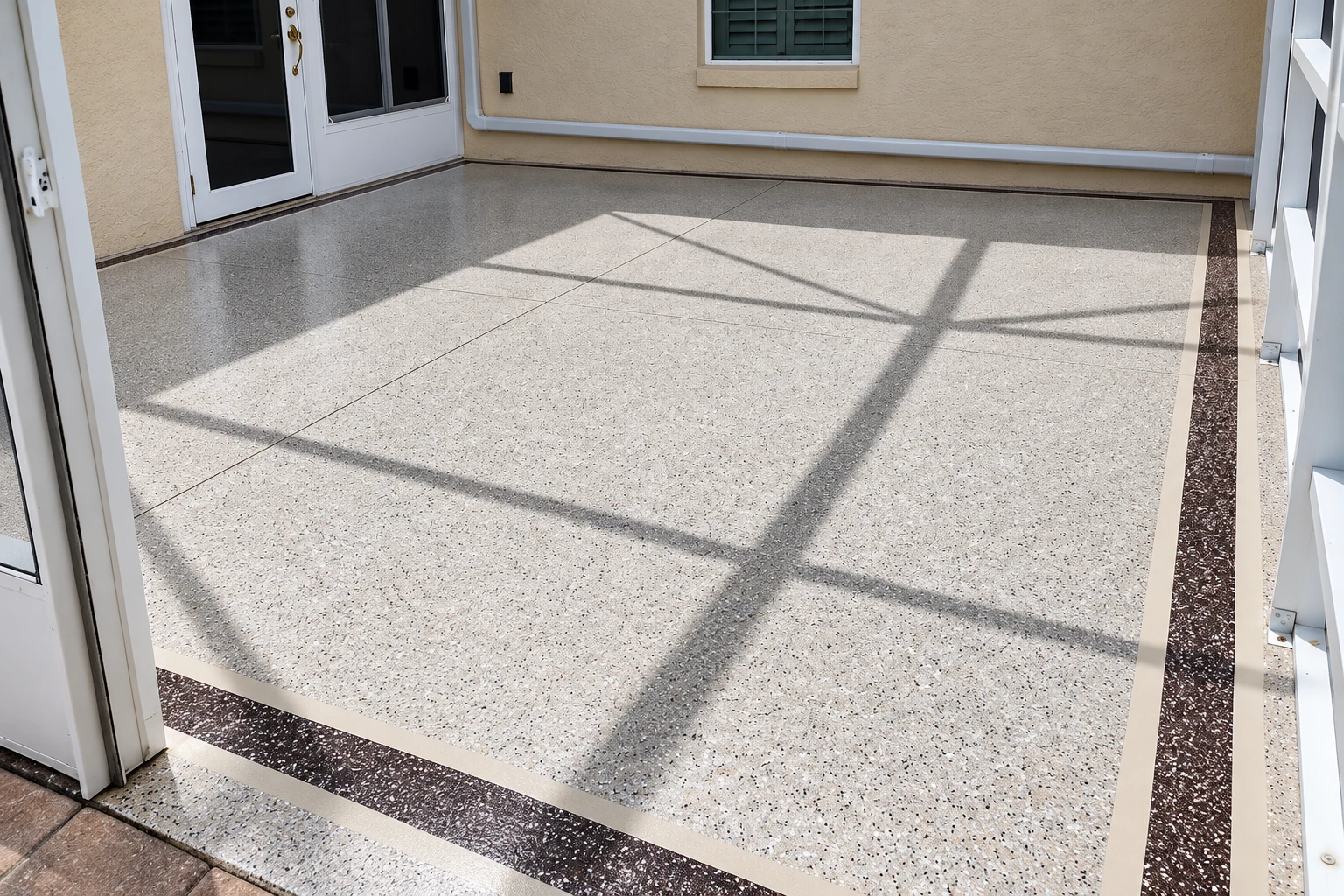
This suits stamped, colored or exposed-aggregate concrete where you want the color to come up darker, a lot like it looks right after a rain. It sits on the surface, so it needs a light hand going on and a little more attention down the road.
What happens when you call us about sealing in Seaside?
Here's how a sealing job goes from your first call to the final walk-through, so you know who you'll be talking to and what you'll have in hand before any work starts.
- Step 01
Call and get a visit
It starts with a call, and then I come out to look at the concrete, check it for moisture and cracks and ask how you actually use the space. Point out anything that bugs you, like a stubborn stain or a patch of old sealer, because that's what shapes the prep.
- Step 02
Read your written estimate
You get a written estimate that spells out the prep, the sealer and how long the concrete stays out of use. That way you know where your money goes before you agree to anything.
- Step 03
Prep, seal and walk through
On the day, we do the prep and put the sealer down. Then we walk it with you and go over how to care for it, including what to keep off it while it cures.
Concrete sealing in Seaside: rinse water, salt air and the bay
One maker of penetrating sealer says it goes only on a dry surface, not a damp or wet one, so we do the washing early, and here it matters where that water ends up. Seaside's storm drains carry water untreated straight into Monterey Bay, unlike the water from your sinks, which goes to a treatment plant, and the city asks residents to call its Public Works Department if they see concrete, paint or other material being washed into gutters and storm drains. That's the reason our rinse water stays out of the gutter. Sealers are also on the list of materials covered by the regional air district's coatings rule, right alongside paints, varnishes and stains.
Salt carried in the sea breeze settles out fastest close to the coast, and the amount drops quickly over about the first 650 feet inland, so a patio near the beach takes on more of it than a driveway up the hill. We're based in Seaside and work in many cities around Monterey Bay and inland from it, and we see that same salty air on jobs in Marina and Pacific Grove, where it's worth weighing when you choose a sealer.
Get a written estimate for sealing your concrete
We reply within one business day to set a time to look at your concrete, and the quote is free and done on site. There's no obligation, so you can take the written estimate and think it over.
Why Seaside homeowners call Seaside Sterling Epoxy Floors
The owner gives your estimate
I come out myself to look at the floor and give the estimate, and I'm on the job with our installers when the work gets done. The person who told you what the job needs is the one standing there making sure it happens.
Prep comes first, since 2023
I started this business in Seaside in 2023 after learning concrete floors as a helper on grinding and coating crews, which is where I saw what bad prep does to a nice finish. If your slab isn't ready for sealer yet, I'll tell you, because a pretty coat that starts peeling helps nobody.
A licensed and insured crew
We're licensed and insured. That means you aren't left wondering who's covered if something goes sideways while a crew is working at your house.
We plan around the fog
Fog rolling in off the bay counts as weather when you're sealing concrete, so I watch the whole day's forecast and not just the chance of rain. If it turns on us, I'll call you to move the date rather than seal into wet air.
If your concrete is drinking water or wearing an old sealer that's past its prime, call (831) 204-4050 or send us a few details and I'll come take a look.
Concrete sealing questions from Seaside homeowners
Will sealing change how my concrete looks?
A penetrating sealer usually won't, and a color-enhancing acrylic will darken it. One maker's penetrating sealer leaves little or no noticeable change once it's dry, while another maker's acrylic sealer brings up the color and darkens the concrete. If you want it to look the way it does now, go penetrating, and if you want richer color, go acrylic.
How much does concrete sealing cost in Seaside, CA?
Professional concrete sealing usually costs about $1.40 to $2.50 per square foot across the US, labor and materials included. That's the national going rate, not our price, and it's based on national figures rather than Seaside jobs. Your written estimate gives you the figure for your own slab.
Can you seal concrete during a rainy or foggy week?
Usually not, because the sealer needs dry conditions for the hours after it goes down. One maker's penetrating sealer goes on only when no rain is expected for 12 hours after application, and an acrylic maker adds heavy fog to that same window. Expect the date to move if the forecast turns.
Can someone seal concrete without a contractor license in California?
Only on small jobs, since California's exemption from contractor licensing covers work up to $1,000. Even then it applies only when the job needs no permit and the unlicensed person has no one working for them on the project.
What is the best sealer for concrete near the ocean?
A silane treatment is a strong option to weigh, because it forms its water-repelling layer on the walls of the tiny pores inside the concrete instead of as a film on top. Sealers and coatings that sit on the surface can delaminate, meaning they come apart in layers, or blister, and either one weakens the protection. The trade-off is look, since the film-forming kind is the one that deepens color.
What causes concrete sealer to bubble, turn white or peel?
Usually too much sealer. The acrylic maker warns that putting its sealer on too heavily, in too many coats, or resealing too often can cause bubbling, whitening, peeling, flaking and eventually failure. So an extra coat isn't extra protection, and resealing just because it's been a while can backfire.
Concrete work that pairs with sealing
Concrete Resurfacing & Overlays
If years of wear have left the surface rough, chipped or mismatched, a new top layer gives you something that looks good enough to be worth sealing.
Self-Leveling Concrete & Overlays
Garage and basement floors that dip toward one corner or hold puddles can be brought back to flat first, so the finish goes down evenly across the room.
Tell us about the concrete you want sealed
Call (831) 204-4050 or use the contact form with the rough square footage and whether you want a natural or darker look, and I can come out ready to talk specifics.