
Concrete Grinding & Surface Preparation in Seaside CA - a sound slab a coating can grip
Peeling paint, old glue or oil stains on your slab? We grind it back to clean, solid concrete so your next floor stays put.
- Licensed and insured.
- Free quotes on site.
- We reply within 1 business day.
Why grind concrete before a new floor goes down?
The short answer: Concrete grinding and surface preparation in Seaside gets your slab ready for whatever goes on top. Diamond pads strip off old paint, epoxy or glue, take down high spots and rough up the surface, so a new coating has clean, sound concrete to grip.
Maybe you pulled up old carpet and found black glue, or the garage paint is lifting where your tires park, or you just want a coating that outlasts the last one. A coating is only as good as the concrete under it, so this is the part of the job I watch closest. The price mostly comes down to how big the floor is and what's stuck to it now, since a bare slab grinds a lot faster than one under thick old epoxy or mastic. The schedule turns on the same things, plus whether a coating follows and the slab needs a moisture check first. I'll put the number for your floor in writing once I've seen it.
How can you tell your slab needs grinding first?
Old coating peeling in patches
If paint or old epoxy is flaking where the tires sit, it usually went down on concrete that was never ground or cleaned properly. Rolling a new coat over it just glues the new layer to the failing one, so both come up together, and the bare spots soak up oil in the meantime.
Oil stains that won't scrub out
Dark spots that come back after scrubbing mean the oil has soaked into the concrete instead of sitting on top. A coating won't hold well over them, and the longer a leak keeps dripping, the deeper the stain goes.
Black glue under old flooring
When you pull up carpet, tile or vinyl, you often find black adhesive stuck to the slab. Nothing new bonds to it well, and it only gets dirtier and harder to strip the longer the room gets used.
What our concrete grinding and surface preparation involves
We start by cleaning off oil and grime, because grinding over an oil spot just smears it around and pushes it deeper. Then we grind with diamond tooling, taking off old coatings or glue, knocking down lips at cracks and joints and opening up the surface, with dust collection hooked up to the grinder the whole time. It's a lot like sanding a door before you paint it, only this door weighs a few tons and argues back. When we're done, whatever goes on next has solid concrete to hold onto, and if the slab still isn't ready for a coating, I'll tell you straight instead of selling you one.
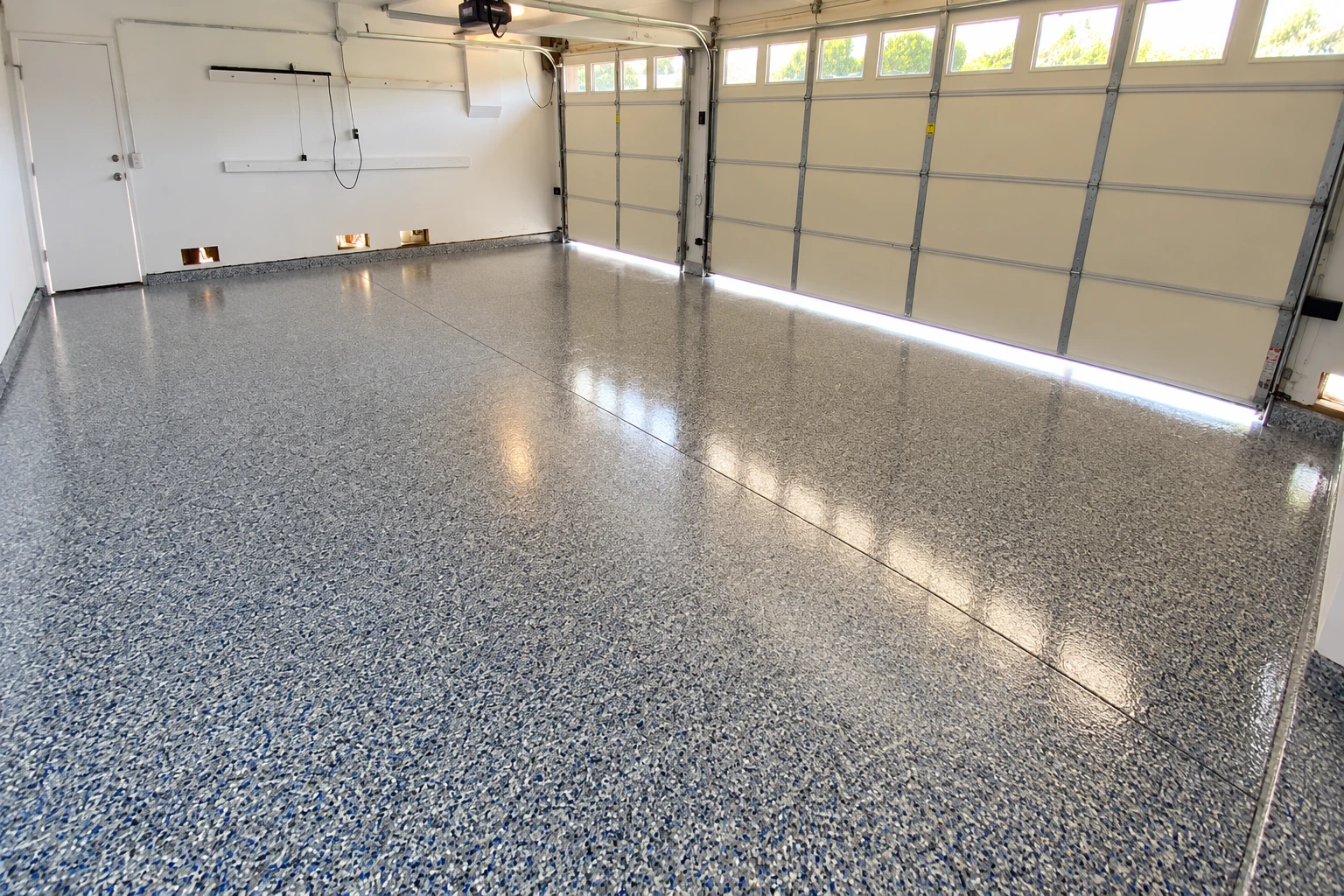
Grinding is usually the first step of something else. If you like the look of plain concrete, concrete sealing right after grinding helps it shrug off stains, and if the slab is too pitted or worn to grind back to a good surface, concrete resurfacing and overlays give it a new top layer to work from.
Light grind for bare concrete
This suits a slab that's never been coated and just needs the surface cleaned and opened up. It's the lighter job, and the right call when the concrete underneath is already in decent shape.
Strip and grind for coated floors
This suits a garage or shop with old paint, epoxy or glue on it, because all of that has to come off before anything new goes down. It takes more passes with coarser tooling, so it's the bigger of the two jobs.
What happens when you call about grinding your floor in Seaside?
Here's how a grinding job goes with us, from the first call to the walk-through at the end, so you know who you'll talk to and what you'll have in hand before you decide.
- Step 01
Call or send the form
Call (831) 204-4050 or send the form, and tell us what's on the slab now and what you'd like on it next. That tells me what to look for when I come out.
- Step 02
I come look at the floor
I check the concrete for moisture and cracks and ask how you actually use the space. A garage that holds a car and a workbench needs different prep from a shop floor that takes a beating every day.
- Step 03
You get a written estimate
It spells out the prep, the product and how long the floor stays out of use. You can see exactly where the money goes before you decide anything.
- Step 04
We grind, finish and walk it
On the day, we do the prep and put the floor down. Then we walk it with you and go over how to care for it.
What concrete grinding in Seaside runs into
The City of Seaside recommends that owners contact its Building Department before any building project or major repairs to find out whether the work needs a permit. That doesn't tell us outright whether grinding your floor needs one, so before work starts, we check with the city or county building office and tell you what they said. If your job does need a permit, we handle the paperwork with you.
We're based in Seaside and work in many cities around Monterey Bay and inland from it, and the floors we get called to look a lot alike from one city to the next. Plenty of older garage slabs carry a coat or two of tired paint and years of oil drips. We see the same thing on jobs in Marina and Monterey, so we plan the cleaning before the grinding and expect the first pass to turn up more old coating than anyone remembers putting down.
Get a written estimate for your slab prep
Tell us what's on the floor now and what you want on it next, and we'll reply within one business day to set a time for me to come see it. The estimate is free and done on site, with no obligation.
Why Seaside homeowners call Seaside Sterling Epoxy Floors
The owner checks your slab
I come out myself to look at the floor and give the estimate, and I'm on the job with our installers when the work gets done. The person who told you what your slab needs is right there making sure it happens.
Grinding crews taught me the trade
I learned concrete floors as a helper on grinding and coating crews before starting our business here in Seaside in 2023. That's where I saw how many failed floors trace back to rushed prep, so I don't rush it.
Licensed and insured on the job
We're licensed and insured. That matters on a grinding job, because there's heavy equipment running in your garage and you shouldn't have to wonder who's covering it.
Planned around California's silica rule
California's silica standard covers dust on construction work, and that includes repair and renovation jobs like grinding a slab. Federal safety research says vacuum controls on grinders may greatly cut a crew's exposure but respirators are still needed, so dust is part of the plan before the grinder ever starts.
On a grinding job, the concrete you end up with is what counts. If you want a straight answer about whether your slab is ready, get in touch or call (831) 204-4050 and I'll come take a look.
Concrete grinding questions we hear in Seaside
How much does concrete grinding cost in Seaside?
The cost depends mostly on the size of the floor and how much has to come off it, since thick epoxy or old glue takes far more grinding than a clean, bare slab. Deep oil stains, cracks that need opening up and filling, and the coating you plan afterward can all add to it. I'll give you a written price after I've seen the floor.
How do contractors control dust when grinding concrete?
A good crew grinds with a strong dust collector hooked to the machine, and at least one coating maker's guide says a capable collector must be used because diamond grinding throws off a lot of dust. Federal safety researchers found workers grinding poured concrete were breathing silica dust far above the recommended limit, and every grinder they tested with a dust shroud, the hood that wraps around the pad, cut that exposure sharply. When you compare crews, ask what collector and shroud each one brings.
What is the difference between wet and dry concrete grinding?
Wet grinding sprays water to hold the dust down, and dry grinding pulls the dust into a vacuum with HEPA filters, which trap very fine particles. Each one changes how the job is set up, so ask any crew which method they plan for your slab and why.
Why does Seaside care about concrete washing into gutters?
Seaside's storm drains carry water straight into Monterey Bay untreated, unlike sewer water, which goes to a treatment plant. The city asks people to report anyone washing concrete, paint or other material into gutters and storm drains to Seaside Public Works, which is one more reason the wet or dry choice matters on a garage that opens onto the street.
Does concrete need to be cleaned before grinding?
Yes. Dirt, oil, grease, chemicals and curing compounds should come off before the surface is ground, because one coating maker's guide notes they can affect how well a coating sticks and holds up, and that's why cleaning comes first on our jobs.
How long do you have to wait to coat concrete after grinding?
When a moisture test is part of the job, plan on waiting at least 72 hours, because the relative humidity test one coating maker's guide describes drills holes in the cured slab and lets them settle that long before the probes are read. That wait belongs in the schedule from the start, and I'd rather wait three days than watch a coating bubble up off a damp slab.
Related services after concrete grinding
Concrete Sealing
Once the slab is ground clean, a sealer soaks into open concrete and helps keep oil, water and tire marks from settling into a bare garage floor.
Concrete Resurfacing & Overlays
When grinding shows the old surface is too scaled, pitted or patched to coat well, a thin new overlay gives you a fresh, even layer to build on.
Call (831) 204-4050 about your slab
Knowing roughly how big the floor is and what's on it now, from paint to old glue, lets us plan the visit around your slab instead of guessing.