Basement flooring in Seaside CA - a floor matched to how damp the room gets
Musty smell, damp spots or a cold bare slab? We check the concrete first, then put down a floor that suits your basement.
- Licensed and insured.
- Free quotes on site.
- We reply within 1 business day.
What floor should go in my basement in Seaside?
The short answer: Basement flooring in Seaside, CA means putting a finished floor such as vinyl plank, tile or epoxy over the concrete slab down there. The right one handles the moisture that concrete can hold, so the floor lasts instead of trapping water until it fails.
Most people call us when they finally want to use the space for a gym, a playroom or a workshop, and they're not sure the slab will cooperate. The price mostly moves with the size of the room, what's on the floor now and has to come up, how much crack repair and leveling the slab needs, and which floor you pick. The schedule turns on what the moisture check finds and how long the new floor has to stay out of use, and your written estimate spells both out for your basement.
How do you know your basement floor needs attention?
Damp spots after it rains
Dark patches on the slab or along the walls after a storm mean water is getting in somewhere, through a crack or up through the concrete itself. Put the wrong floor over that and the water gets trapped underneath, where it turns into smell, mold or a floor that lets go.
A musty smell that lingers
A basement that smells like an old gym bag usually holds more moisture than it looks, even when the floor feels dry to your hand. Carpet or a cheap floating floor soaks that up, and by the time you see stains, the pad underneath is usually done.
Old floor lifting or peeling
Tiles popping loose, paint flaking or a coating bubbling up usually means moisture or poor prep broke the bond to the concrete. Laying something new on top just copies the problem, and the longer it sits, the more has to come up before anything new goes down.
How we put in basement flooring
We look for signs of water and check the slab before we suggest any floor, because the wrong one can fail fast down there. That means looking for leaks, damp air and cracks, checking how the ground slopes around the house and whether a sump pump is keeping up, and testing whether moisture is moving up through the concrete, which a slab can do while it looks bone dry. Once we know how damp the room gets and what you'll use it for, we match the floor to both, repair cracks, level the low spots and get the concrete clean before the floor goes down. I learned on grinding and coating crews that you can't sweet-talk a wet slab, so if yours isn't ready, I'll tell you that before I sell you anything.
Most of that prep runs through two of our other services. Concrete grinding and surface preparation takes off old glue, paint and the weak top layer so a coating or adhesive grabs solid concrete, and concrete sealing fits when you want the bare slab protected and easier to sweep without a full floor on it.
Vinyl plank for living space
Vinyl plank is comfortable underfoot, waterproof and fairly affordable, so it suits a family room, office or guest space that should feel like the rest of the house. It's the one I'd look at first when the basement is going to be lived in.
Tile for rooms that get wet
Tile is durable and water-resistant, so it suits a laundry room, bathroom or entry that sees water and foot traffic. It feels colder on bare feet and costs more to install, so it earns its keep where the floor gets wet more than in a den.
Epoxy for gyms and workshops
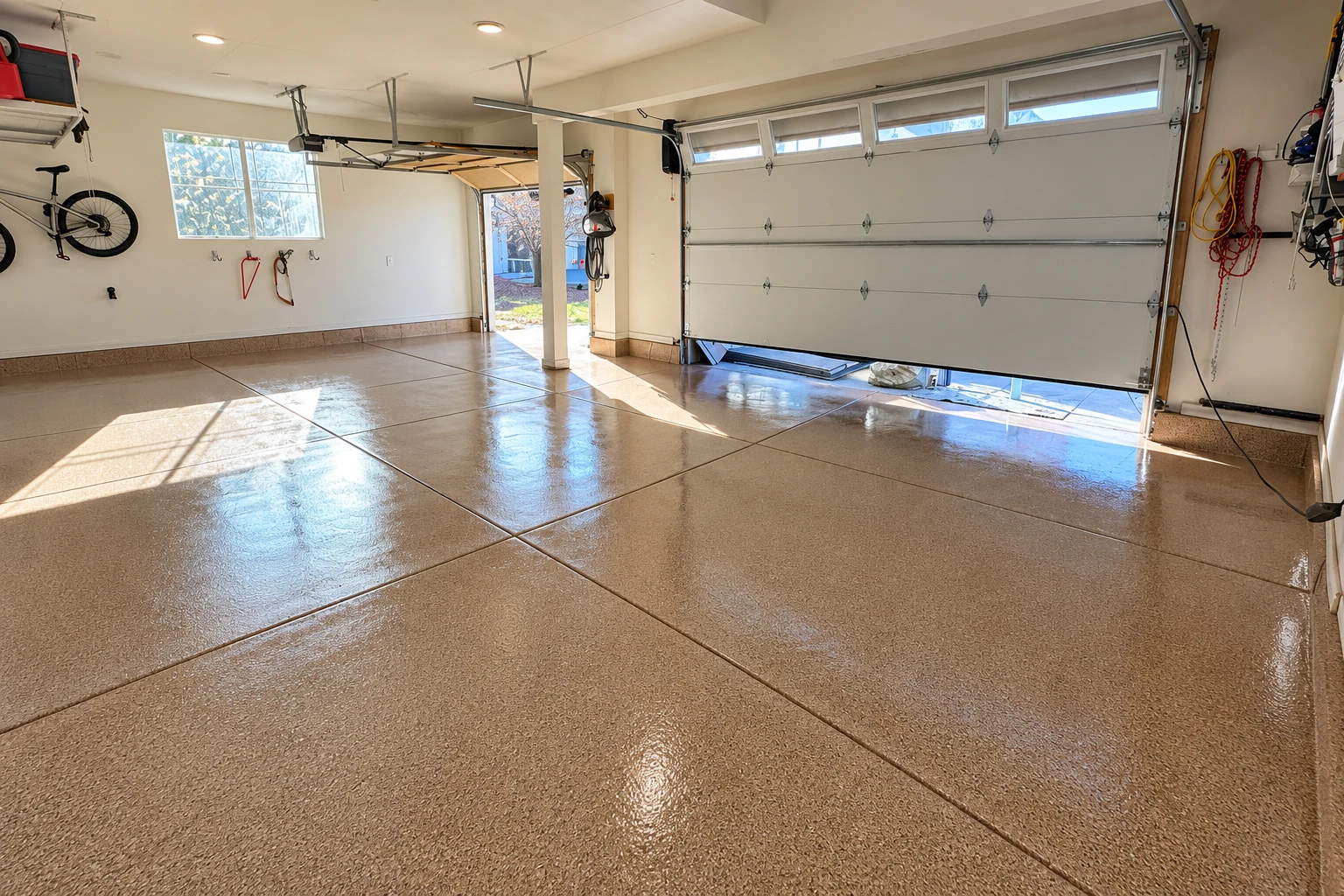
Epoxy is a coating bonded right to the concrete, so it suits a home gym, workshop or utility room where weights drop and things spill. It can feel less like a finished living room, which is why I steer people toward it for working spaces.
What happens after you call about basement flooring in Seaside?
Here's how a basement floor goes from your first call to you walking on it, and what you'll know at each point before any work starts on your slab.
- Step 01
Call or send the form
Call (831) 204-4050 or use the form, and tell us the basement's size, what's on the floor now, any signs of water and how you plan to use the room. That lets me plan the visit around your floor.
- Step 02
I check the floor in person
I come out to look at the floor, check the concrete for moisture and cracks, and ask how you actually use the space. It's like a mechanic listening to the engine before quoting the repair.
- Step 03
Get a written estimate
You get a written estimate that spells out the prep, the product and how long the floor stays out of use, so the price isn't a guess. If the slab isn't ready for a floor yet, I'll say so and tell you why.
- Step 04
Prep, install and walk-through
On the day, we do the prep and put the floor down. Then we walk it with you and go over how to care for it.
Basement flooring in Seaside and nearby
I won't guess whether your basement floor needs a permit, because that's the building office's call, and in Seaside the city's building office takes permit applications. Before work starts, we check with the local city or county building office and tell you what they said. If your job needs a permit, we handle the paperwork with you.
We're based in Seaside and work in many cities around Monterey Bay and inland from it, and the call is usually the same one, a slab that's been storage for years and someone who finally wants a gym or a shop out of it. We run the same moisture check on jobs in Marina and Salinas, because a basement can look dry and still not be.
Get a written estimate for your basement floor
We reply within one business day to set up a visit. Then I come out, check your floor and give you a free estimate on site, with no obligation.
Why Seaside homeowners call Seaside Sterling Epoxy Floors
I do every estimate myself
I come out myself to look at your floor and give the estimate, and I'm on the job with our installers when the work gets done. The person who wrote your estimate is right there watching the prep happen.
Licensed and insured for your job
We're licensed and insured. A basement job puts grinders, tools and people in your house, so it should be covered if something goes sideways.
Based in Seaside since 2023
I started our business here in Seaside in 2023, after learning concrete floors as a helper on grinding and coating crews. That's why I'll talk your ear off about prep before I talk about colors.
On a basement floor, how damp the slab stays decides more than anything else, so let's find that out first. Call or use our contact page, and I'll come take a look.
Basement flooring questions from Seaside homeowners
What is the best flooring for a damp basement?
For a wet basement, or one you're not sure about, tile, epoxy or waterproof vinyl plank is usually a safer pick than standard laminate or hardwood. If you can't say for certain how dry the room stays, lean toward one of those three. I'll check the slab when I come out so you're not guessing.
How much does basement flooring cost in the Monterey area?
Flooring installation in Monterey usually runs about $3,400 to $13,000 for about 1,000 square feet installed, including removing the old floor and prepping the subfloor. That's a general flooring figure for the market, not our price, and a basement can cost more when it needs a moisture barrier, an underlayment pad under the floor, leveling or crack repair. Those extras are what keep the finished floor from failing, and your written estimate lists each one.
Where do I apply for a building permit in Seaside?
Building permit applications in Seaside go to the City of Seaside's Building & Code Enforcement division at City Hall, 440 Harcourt Avenue, and City Hall's phone is 831-899-6700. The division also sets what you have to submit with an application. For a basement floor, we check with them before work starts, so you'll hear what they said from us.
Can someone without a license do a small flooring job in California?
Only minor work worth up to $1,000, and only when the job needs no permit and the person employs no one, under the state's contractor licensing rules. If a general contractor is running your basement remodel, it's fair to ask whether it holds the flooring classification itself or hands the floor to a licensed specialty contractor, since state licensing guidance allows either path.
Can you put hardwood floors in a basement?
Solid hardwood is usually a risky choice for a floor that sits below ground level. Engineered wood can work in some dry, finished basements, but it costs more and needs careful moisture control. A wood flooring trade group says the concrete must be moisture tested before any wood floor goes in, with moisture control in place.
How do I remove old vinyl flooring from a basement safely?
Carefully, and not with a pry bar and a free Saturday, because one flooring maker warns of asbestos and silica when old resilient floors, the flexible vinyl kind, come up. That maker points to the Resilient Floor Covering Institute's recommended removal practices. If there's an older vinyl floor down there, mention it when you call so we can plan for it before anyone starts scraping.
Concrete services that go with a basement floor
Concrete Grinding & Surface Preparation
If an old coating, glue or rough patches cover your slab, grinding opens up clean concrete so the new floor has something solid to grab.
Concrete Sealing
If your basement slab is just storage space for now, a sealer cuts down dusting and stains while you decide what floor the room really needs.
Have your basement slab checked first
We take calls until 11 PM on weekdays, so call (831) 204-4050 tonight while you're standing in the basement wondering what it could be.